Flexible working is becoming a normal part of how organisations operate, helping people to live well while supporting business performance.
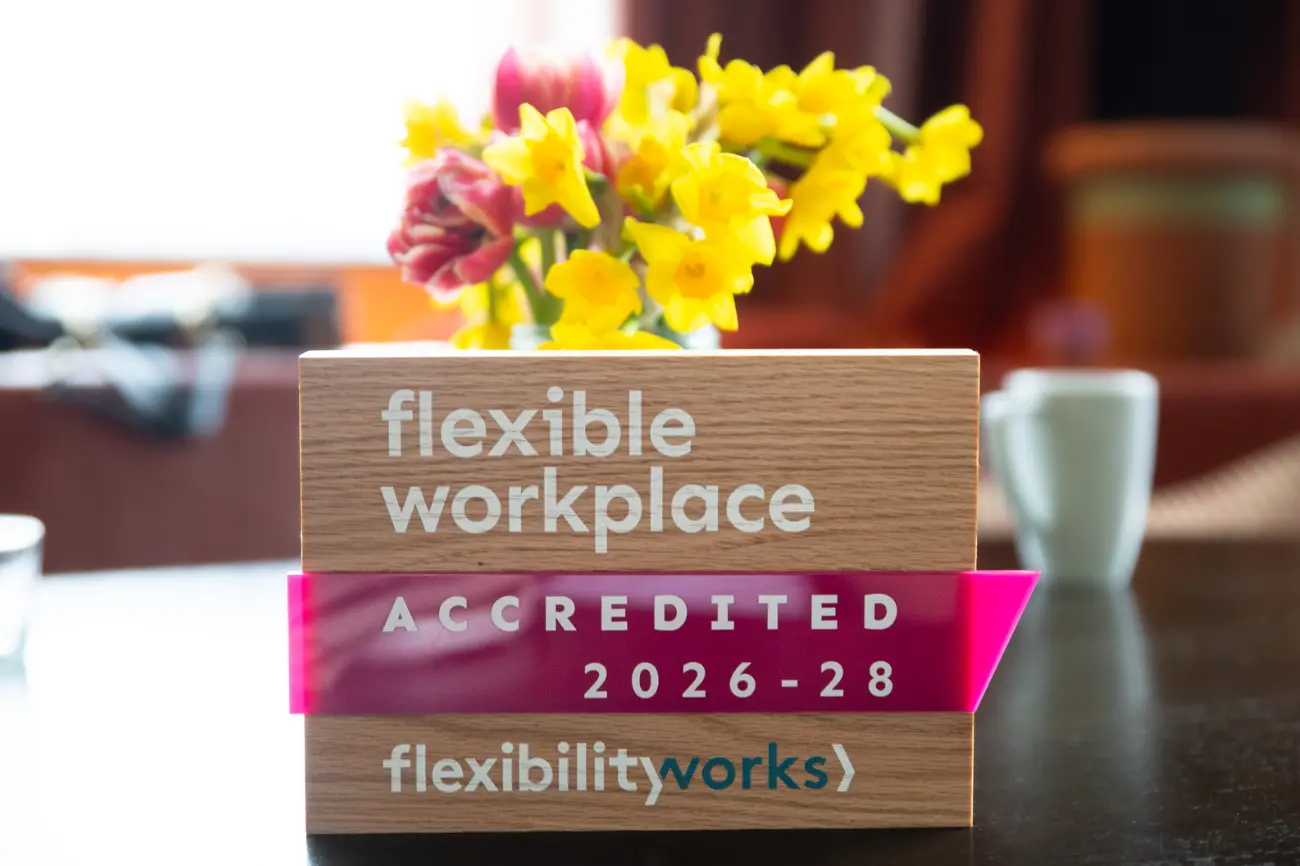
The Flexible Workplace Accreditation is the first of its kind in the UK, and ten organisations in Scotland have now become the first to achieve it through the pilot, giving a clearer picture of what good flexible working looks like in reality.
There’s been a quiet shift happening in workplaces across Scotland.
Not a big policy overhaul or a dramatic redesign of work, but something more gradual than that. Small changes. Thoughtful decisions. Managers trying things. Teams figuring out what works day to day.
And now, we’re starting to see how that comes together.
At our recent launch event, sponsored by Quorum, we recognised the first organisations to achieve the Flexible Workplace Accreditation, becoming Scotland’s first accredited Flexible Workplaces.
It was a really positive moment to bring these organisations together and reflect on the progress they’ve made, and the work behind it. The conversations, decisions and commitment it takes to make flexible working work well.
Pamela Mundt, Head of Marketing at Quorum, said:
“We really believe in what Flexibility Works are doing. This accreditation supports better outcomes for employers and employees, particularly those in lower-paid roles, where flexibility can make a real difference to people’s lives.
We want to use our experience as a flexible employer to help others, support organisations across Scotland, and play a responsible role in the Scottish business community.”
Scotland’s First Accredited Organisations
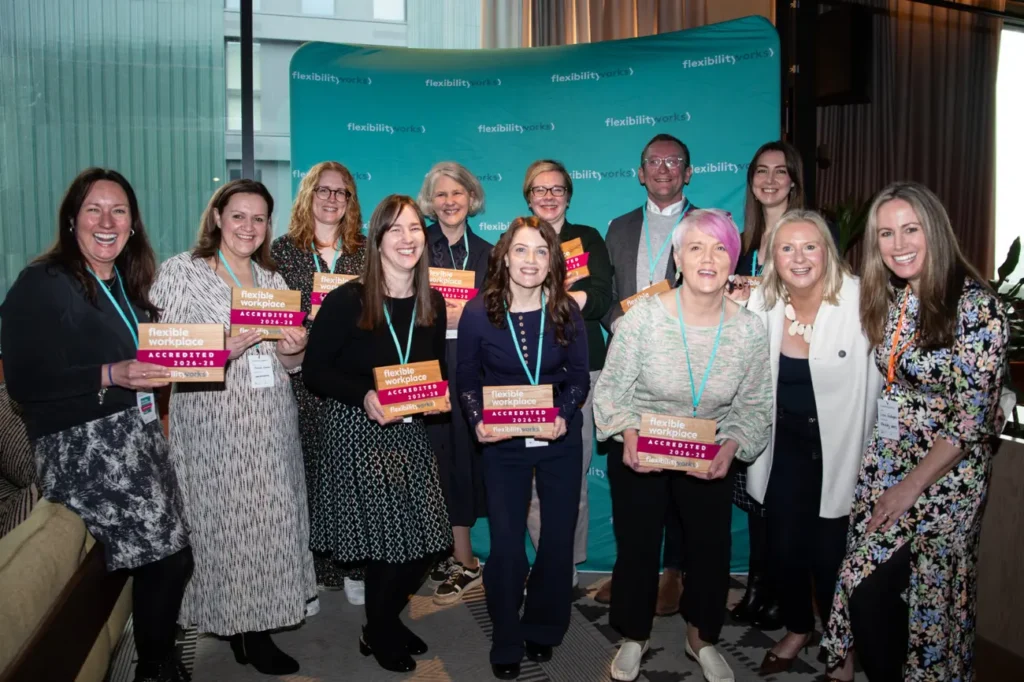
We were proud to recognise:
- Accountability Edinburgh
- Barrhead Housing Association
- Cyber and Fraud Centre – Scotland
- Flexible Childcare Services Scotland
- Greenspace Scotland
- Into Work
- Melville Housing Association
- Scullion Law
- Social Investment Scotland
- Working Rite
They represent different sectors, different roles and very different ways of working.
But they all share something important.
They are creating workplaces where flexible working works in practice, and where people can feel the difference day to day.
These aren’t just organisations with a policy in place. They’re teams and leaders who have made conscious decisions about how work works, and how it can work better for their people.
A well thought out approach
This accreditation has been shaped by more than 15 years of experience working directly with employers across Scotland, alongside input from an advisory board and organisations working in different sectors and roles.
That matters, because what works in one organisation will look different in another and the accreditation assessment process has been shaped to reflect that. It focuses on what works in practice and gives organisations a way to step back, understand their approach, and build on what’s already working for their people and their business.
Lisa McPherson, Group People Director UK & Europe City Facilities Management Holdings (UK) Ltd and Advisory Board Member at Flexibility Works, said:
“These days, I think most organisations recognise the importance of flexible working, but many are still working out what good looks like in practice. It isn’t a one size fits all approach, it varies by business, role and the needs of a multigenerational workforce. The Flexible Workplace accreditation gives organisations a straightforward, practical framework and support to help them get there.”
Why they chose to do this
For many of these organisations, the accreditation felt like a natural next step.
They were already doing good things, but wanted a clearer way to bring consistency, confidence and visibility to their approach.
In particular, they told us they wanted to:
- show their commitment to their people
- gain external recognition
- build on the progress they had already made
It wasn’t about ticking a box.
It was about taking something they already cared about and making it work more clearly, consistently and confidently across their organisation.
As one organisation shared:
“We knew we were doing a lot already, but this gave us a way to bring it together and show that clearly, both to our team and externally.”
What they valued about the experience
One message came through clearly from every organisation: the process worked.
It was described as simple, straightforward and not onerous. More importantly, it felt supportive, like working in partnership.
Organisations valued having the space to step back, reflect and think about what good flexible working looks like in their context.
As one organisation put it:
“It was straightforward and supportive. It didn’t feel like an audit. It felt like something designed to help us improve.”
Two things stood out in particular.
Hearing directly from their own people helped them understand what’s working, where things vary, and how flexible working is really experienced day to day. Clear, practical recommendations then gave them a way forward, helping them prioritise and move ahead with confidence.
As Lorna Wilson, CEO of Barrhead Housing Association, said:
“It is a timely and modern process, with lots of support to help us continually improve.”
What they’re already seeing
Even at this early stage, organisations are seeing real impact.
They are talking more openly about flexible working, creating more clarity across teams and building trust.
In practice, that looks like improving internal guidance, embedding flexibility into onboarding, and continuing conversations with staff about what works.
These changes may be simple, but they are meaningful, and they are already shaping how people experience work day to day.
As one organisation shared:
“It’s helped us have more open and honest conversations about how we work, and that’s already making a difference.”
Why this matters for businesses and for people
Flexible working is becoming an important part of how organisations attract, support and retain their people.
What these organisations show is that flexible working can work across different roles, sectors and environments, when it’s designed thoughtfully and supported in practice.
When it works well, people feel it in the culture, in the conversations, and in how they are able to do their job and live their life alongside it.
Sharon Gillies, Chief Operating Officer, Social Investment Scotland said:
‘Achieving accreditation as a flexible workplace was an important milestone for Social Investment Scotland, reflecting our commitment to embedding flexible working into how we operate. At SIS, our flexible working policy is grounded in our core values and underpins a culture of trust, balance, and high performance.
This approach enables our people to work in ways that support productivity and wellbeing, while strengthening collaboration across a diverse and cohesive team. Flexible working is central to our people centred culture, one in which individuals are empowered, trusted, and motivated to contribute their best. Through these principles, SIS attracts and retains talented people while actively promoting a healthy and sustainable work–life balance for all.’
And from Melville Housing Association:
“The accreditation helps us show we really care about people… and connect with like-minded organisations.”
A shared commitment
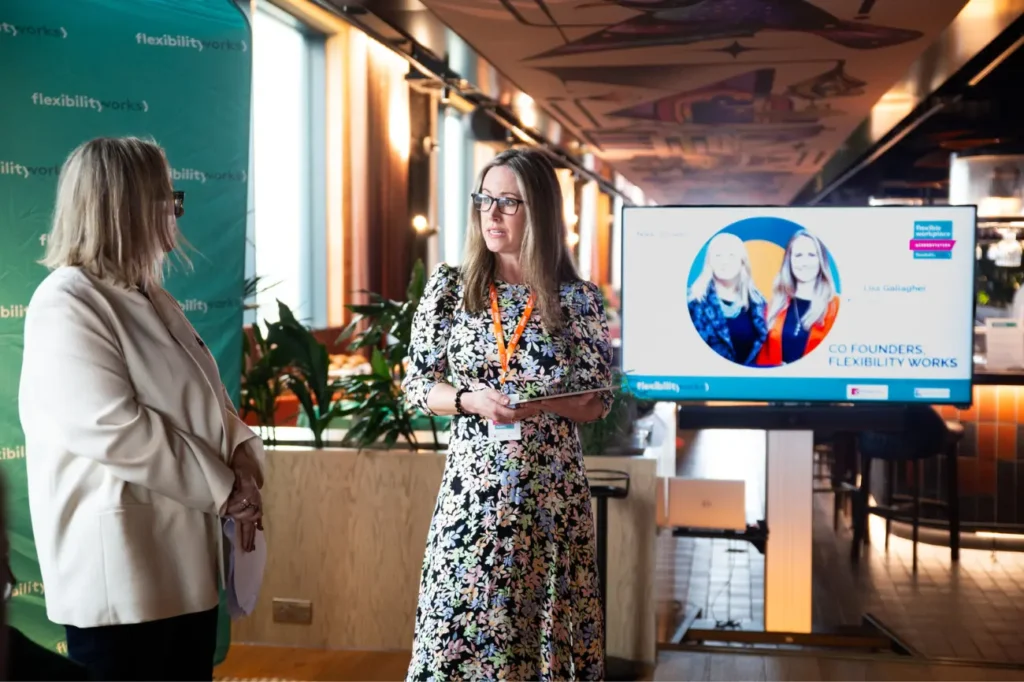
Lisa Gallagher, Co-Founder of Flexibility Works, said:
“We’re incredibly proud of these organisations and what they’ve achieved. Hearing the stories from their staff, about what flexible working means in their day-to-day lives, has been powerful.
These are organisations who have made conscious decisions about how work works, creating environments where people can do great work and have a life alongside it.
That’s what brings this group together, a shared commitment to being great employers, strong organisations, and part of something bigger.”
Lyndsay Fraser Robertson, Programmes and Practice Officer, The Robertson Trust, said:
“Flexible working is fundamental to fair, high quality jobs, especially for people on the lowest incomes. It should be a standard feature of good work, not something dependent on role, income or individual managers.
“This accreditation provides a clear, credible benchmark for what effective flexible working looks like in practice, helping more people to enter work, stay in work and thrive.
The Robertson Trust is committed to supporting work that can drive lasting change on poverty and trauma in Scotland. As part of this, we want to see a Scotland where paid work offers a reliable route out of poverty, and we are proud to support an initiative that can improve job quality and transform lives.”
More than recognition
For these organisations, accreditation is more than a badge.
It’s something they are already using to strengthen recruitment, demonstrate their values, support funding and award applications, and connect with like-minded organisations.
It gives them a clear, credible way to say this is how we work, and this is what we stand for.
Not quite there yet? You’re not alone
We know not every organisation will feel ready for accreditation straight away.
Many employers are already offering some flexibility, but want to build confidence, consistency or clarity before taking that step.
That’s exactly why we’ve developed the Flexible Workplace Accelerator, a supported programme that helps organisations strengthen their approach using the same framework, at their own pace.
Thinking about it for your organisation?
If you’re already offering flexible working, even in small, everyday ways, you might already be closer than you think.
That’s often the starting point: recognising what’s already there and building on it in a structured, supported way.
👉 Learn more about the Flexible Workplace Accreditation
👉 Join our online information session on 23rd April to find out more